
Around 90% of startups fail. I know, shocking. If that scared you, then this might be even scarier.
Nearly 42% of failed startups cite “misreading market demand” as their primary reason for failure.
That’s not a product problem. That’s a demand generation problem.
After helping startups raise over $425 million in venture capital and achieve four exits valued at more than $2.5 billion, I’ve seen this pattern repeat itself. Brilliant founders build amazing products, then wonder why nobody’s buying. They blame the market, the economy, or bad timing.
But they NEVER created demand for what they built.
It’s a harsh truth, but founders need to know that having a great product isn’t enough. You need people to want it, be aware of it, and understand why they need it. That’s demand generation, and it’s the difference between joining the 90% that fail or the 10% that thrive.
Let’s start with some hard numbers. Only 2 in 5 startups are profitable. That’s only 40% of startups that turn a profit!
The problem gets worse when you look at startup marketing budgets. The average marketing budget dropped by 15% in 2024 compared to 2023 spending. Startups are cutting marketing spend just when they need it most.
But here’s where it gets interesting. Startups that invest in demand generation see remarkable results. Companies that implemented a demand generation strategy saw a 35% increase in qualified leads and up to 10% revenue growth.
The difference is that these companies understand that demand generation is a proven and effective business strategy.
I’ve worked with close to a hundred startups, from early-stage companies to unicorns. The ones that struggle make the same mistakes over and over.
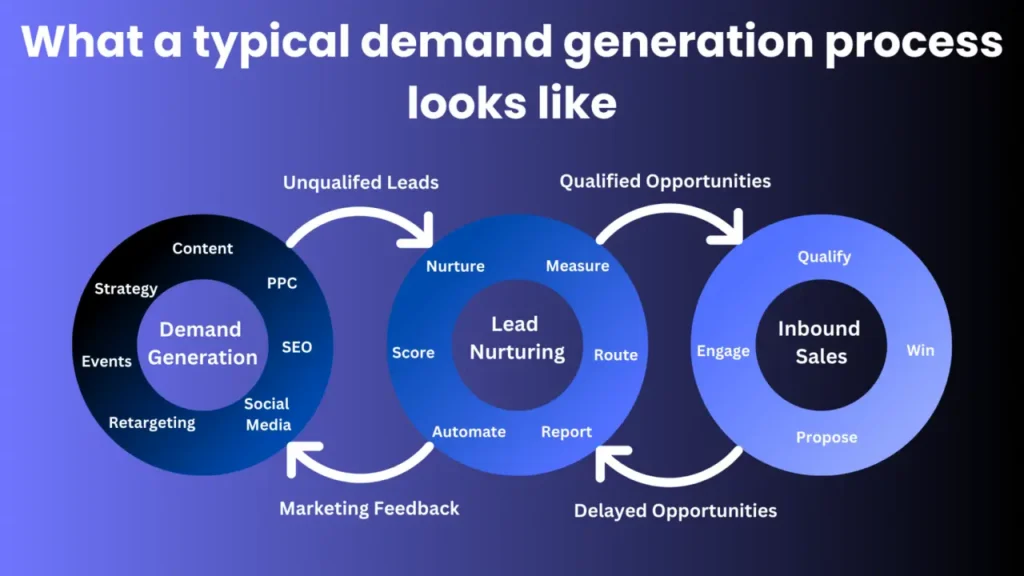
Lead generation captures individuals who are already interested in your product. Demand generation creates the want in the first place. Most of your buyers aren’t ready yet, so demand generation keeps you top of mind for when they are.
You can’t generate demand if you don’t know who you’re targeting. B2B customers will respond to salespeople who connect by sharing relevant content and insights. You can’t be relevant if you don’t know who you’re talking to.
Most startups still chase vanity metrics, such as website traffic, instead of meaningful engagement. Spend your valuable time and energy on improving lead quality rather than focusing on lead quantity. Treat it like a top priority.
In my experience helping startups scale from zero to hundreds of millions in revenue, here are the five pillars that separate winners from losers:
Understanding pain points, buying behavior, and decision-making processes allows you to go beyond “marketing managers at SaaS companies”. You get to deeply understand your customer’s daily struggles, budget constraints, and what keeps them up at night.
Create ultra-detailed buyer personas with names and personalities. When you can picture exactly who you’re talking to, your messaging becomes laser-focused instead of generic. You’ll know them inside and out.
The key is creating content that addresses specific problems at each stage of the buyer journey. Early-stage content to build awareness. Middle-stage content for educating and building trust. Late-stage content has to demonstrate value and drive decisions.
Companies with blogs are more likely to generate leads than those that don’t have one. But make sure that the blogs you create fit into a content strategy that moves people through your funnel.
B2B marketers will say that email is their most effective distribution channel for demand generation efforts. Email works, but it’s not the only game in town.
The best demand generation strategies combine multiple channels:
Each channel serves a distinct purpose, but they all work together to create a consistent touchpoint with your audience.
Monitor intent signals like:
Innovative startups use data to understand these specific signals to know when prospects are ready to buy. This data helps you prioritize leads and deliver the right message at the right time.
53% of marketers allocate 50% or more of their budget to lead generation, but many struggle to prove ROI. Track the metrics that impact your business:
It’s a harsh truth, but founders need to know that having a great product isn't enough. You need people to want it, be aware of it, and understand why they need it. That's demand generation, and it's the difference between joining the 90% that fail or the 10% that thrive.
Here’s where things get exciting. AI is revolutionizing how all startups approach demand generation.
Companies that use AI to enhance sales growth experience a significant increase in leads and cost efficiencies. AI tools can now analyze customer behavior patterns to predict buying intent.
They can also personalize content at scale based on individual preference, optimize ad spend, and score leads based on likelihood to convert.
Startups embracing these technologies are pulling ahead of those still relying on manual processes.
You want to minimize mistakes as much as possible when creating your demand generation strategy. A few tips to correct those mistakes:
The startup world is competitive, but most of your competitors are making the same mistakes. They’re focusing on features, not benefits, and talking about themselves instead of their customers’ problems. They’re optimizing for clicks instead of conversions.
This is a massive opportunity for startups that get demand generation right. While your competitors struggle to get noticed, you can develop a systematic approach to creating, capturing, and converting demand.
Your product might be amazing, but without demand generation, it’s just another great idea that nobody knows about.
Take the brand assessment. Five minutes. We will show you where the gap is.

